Sessions/Tracks
Track 1: Cell Signaling
Cell signaling is highly complex system and extremely specific process that governs many important functions in bacterial and human cells. Each signaling process involves multiple steps, and the major research challenge is to perform suitable experiments and modeling not only to study the individual steps, but also to understand how these steps are perfectly coordinated and regulated to produce the end point response. Cellular Signaling publishes original research describing fundamental and novel findings on the mechanisms, actions and structural components of cellular signaling systems. It is the mechanism by which stimuli are transmitted via signaling cascade to effectors molecules that orchestrate the appropriate response.
Track 2: Modes of Signaling & Signaling Pathways
In multicellular organisms, cells use many kinds of extracellular molecules to send signals and communicate with one another. All signal molecules act as ligands and that bind to receptors expressed by their target cells, there is noticeable variation in the structure and function of the various types of molecules that play as signal transmitters. Cells communicate with each other via direct contact juxtacrine signaling, paracrine signaling, and endocrine signaling. Cell signaling can be divided to be mechanical and biochemical based on the type of the signal. Some cell–cell communication requires direct cell–cell contact. Some cells can form gap junctions that connect their cytoplasm to the cytoplasm of adjacent cells. In cardiac muscle, gap junctions between adjacent cells provides for action potential propagation from the cardiac pacemaker region of the heart to spread and coordinately cause contraction of the heart.
Track 3: Protein Signaling & Neuronal Signaling
Protein and intracellular signaling peptides generally are peptides and proteins which are involved in transmission of signals or signal transduction across the membrane of all cells. Signals in the form of second messengers, hormones, proteins and other biological molecules which are recognized by cell surface receptors that transfer their response to other intracellular signaling peptides and Protein like Transcriptor Factor. The broadly distributed monoaminergic neurotransmitter serotonin (5-hydroxytryptamine, 5-HT) exerts its actions via 14 classes of receptor. In many signaling pathways, many type of factors have been isolated by molecular genetic studies and whole genome analysis.
Track 4: Signaling Defect and Diseases
Ample number of diseases is caused by defects in signaling pathways. The nature of these defects and how they are induced varies excessively. Pathogenic organisms and viruses, many of which can obstruct with signaling events, cause some of these defects. The thought of signalsome remodeling and disease provides a schema for considering how defects in signaling pathways can conclude in disease. Most of the severe diseases in humans, such as hypertension, diabetes and many forms of mental illness, look to appear from subtle phenotypic modifications of signaling pathways.
Adhesion of cells is a prime factor of the architecture of many tissues. Cell adhesion is the process cells interact and attach to a surface, substrate or another cell, mediated by interactions between molecules of the cell surface. Cell adhesion happens from the action of transmembrane glycoproteins, and these include selectins, integrins, syndecans and cadherins. Cellular adhesion is essential in maintaining multicellular structure. Cell adhesion includes like Genomic and Functional Screening. Cell adhesion is also essential for the pathogenesis of infectious organisms. Viruses also have adhesion molecules required for viral binding to host cells like in influenza virus. Dysfunction of cell-adhesion and cell-migration occurs during cancer metastasis.
Market Analysis
Importance & Scope
Cell signaling and cancer therapy is a Major Field in modern medical Practice and Diagnosis. Cell signaling and cancer therapy is bound with the system biology, computational biology, genomics proteomics, metabolomics, drug designing clinical trials, bacterial pathogenesis and microbial immunization. This field includes the Cell Identification, Cell Viability, Cell Signaling Pathway/Signal Transduction, Cell Proliferation, Cell Interaction, Target Identification and Validation, Single-cell Analysis. Cell signaling and cancer therapy includes the investigation of the harming effect of ailment on cells and tissues and the route in which the body looks to secure and repair itself. The global cell analysis market is expected to reach USD 26.0 Billion by 2020 from USD19.0 Billion in 2015, growing at a CAGR of 6.56% from 2015 to 2020.Prominent players in the cell market are BD Biosciences, Danaher Corporation, GE Healthcare, Miltenyi Biotec, pluriSelect, STEMCELL Technologies, Sigma-Aldrich Corporation and Thermo Fisher Scientific, Inc.
Cell signaling and cancer therapy 2017 conference will cover the new research Techniques and concentrates on Exhibition of new Products introduced by the biotech Laboratories. Also covers the increase in need for cancerous patient. Cell signaling and cancer therapy brings basic and Clinical research into mechanisms of Diseases which is caused by cancer.
Why Chicago?
Chicago is the third most popular city in the United States. With over 2.7 million residents, it is the most populous city in the state of Illinois and the Midwestern United States, and the county seat of Cook County. The study and research of the Clinical Genetics is top in USA when compared to the Europe and Asia. Clinical Genetics related companies and products are mostly found in USA. The most developed technologies related to Genetics are used in universities in USA. There are 5 research institutes and 51 research centers. Chicago has been a world center of higher education and research with many universities that are in the city proper or in the immediate environs. These institutions consistently rank among the top National Universities in the United States, as determined by U.S. News & World Report. Top universities in Chicago are the University of Chicago, Illinois Institute of Technology, Northwestern University, Loyola University Chicago and DePaul University . The Major Biotech Companies in chicago are: Biosceptre, Charles River Laboritries, Circassia Pharmaceuticals, Errant Gene Therapeutics, Novian Health, Neurodon, Maroon Biotech.
Chicago is a major transportation hub in the United States. It is an important component in global distribution, as it is the third-largest inter-modal port in the world after Hong Kong and Singapore.
List of universities and institutes in Chicago
· Aurora University
· Chicago State University
· Concordia University Chicago
· DePaul University
· Governors State University
· Illinois Institute of Technology
· Loyola University Chicago
· National University of Health Sciences
· Northeastern Illinois University
· Northern Illinois University
· Northwestern University
· Saint Xavier University
· Trinity International University
· University of Chicago
· University of Illinois at Chicago
The major Biotech Companies in Chicago are
· Biosceptre
· Charles River Laboritries
· Circassia Pharmaceuticals
· Errant Gene Therapeutics
· Novian Health
· Neurodon
· Maroon Biotech
· Aquarius Biotechnologies
· Auris Medical
· DeNova Research
· Experimur
· HumanZyme
· Regenerative Medical Solutions
Conference highlights
· Cell Signaling
· Modes of Signaling & Signaling Pathways
· Protein Signaling & Neuronal Signaling
· Signaling Defect and Diseases
· Cell Adhesion and Cell Communication
· Advanced Approach in Cell Signaling
· Cancer Therapy
· Radiation Therapy
· Chemotherapy
· Immunotherapy & Targeted Therapy
· Cancer Stem Cell Therapy
· Common & Novel Therapies in Cancer Treatment
· System biology
Cell Analysis Market, by User
• Hospitals and Academic & Research Institutes
• Contract Research Organizations (CROs) and Pharmaceutical & Biotechnology Companies
• Laboratories
• Cell Culture Collection Repositories
• Other End Users
Cell Analysis Market, by Region
• North America
• U.S.
• Canada
• Europe
• Germany
• France
• U.K.
• Italy
• Spain
• RoE
• Asia-Pacific
Companies of cell signaling and cancer therapy
· OncoSec Medical
· Bloomberg
· Biocompare
· Biovision
· discoverX
· Cisbio assays
· ImmunoCellular Therapeutics
· Celldex Therapeutics
· Northwest Biotherapeutics
· Inovio Pharmaceuticals
· AstraZeneca
· GlaxoSmithKline
· Durata Therapeutics
· Therapeutic Proteins
· Novaerus Inc.
· Q1 Productions
· ALTATHERA Pharmaceuticals
· Mariam Medical
· Proteintech Group
· Merck
· Sanofi
· Pfizer
· Roche
· Novartis
· Johnson & Johnson
· Quintiles
Cell Signaling Analysis Market by Product
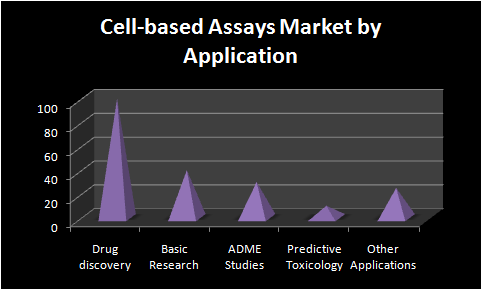
The global cell-based assays market is expected to grasp USD 18,329.37 Million by 2020 from USD 10,799.53 Million in 2015, growing at a CAGR of 11.16% between 2015 and 2020. The global pharmaceutical industry is expected to rise at a CAGR between 7% and 12% in the forecast period 2014 to 2019.The global oncology drug market is expected to reach $ 150 billion by 2020 from $ 107 billion in 2015 entering annual growth rate of 7.5-10.5 percent through 2020, according to a new study. The global Cancer/Tumor Profiling market is poised to reach USD 61.87 Billion by 2021 from USD 25.82 Billion in 2016, at a CAGR of 19.1% from 2016 to 2021.
Cancer Therapy Analysis Market by Product
Cancer Biological Therapy Market size is expected to reach USD 100 billion by 2023; as per a new research report by Global Market Insights, Increasing incidence rates and increased adoption of biologic therapy will drive global cancer biological therapy market size It is estimated by the ACS that 180,890 prostate cancer and 246,660 breast cancer cases will be diagnosed in 2016 in the U.S. Cancer growth blockers market was over USD 18 billion in 2015, and is expected to rise at 5.8% CAGR from 2016 to 2023. Bispecific monoclonal antibodies are anticipated to grow at 6.5% CAGR from 2016 to 2023. The global Cancer therapy market is estimated to grow at 17.6% CAGR to reach $52.2billion by 2021. Breast cancer therapy is the largest market expected to reach $30.8 billion by 2016 at an estimated CAGR of 15%.